How to Prevent Rust on a Classic Car
How to prevent rust on a classic car comes down to controlling moisture, salt, and condensation before corrosion reaches bare steel. Dry storage, careful washing, thorough drying, and appropriate undercoating help limit corrosion on older underbodies, wheel wells, seams, and hollow structural sections. This guide covers storage, prep, products, and inspection.
Key Takeaways
- Classic car rust prevention starts with controlling moisture, salt, and condensation because untreated corrosion can progress into more serious or structural damage over time.
- New England Rust Defenders sees road salt and brine accelerate corrosion in wheel wells and seams each winter.
- A climate-controlled garage with stable temperature and humidity reduces condensation and wet-dry cycling in storage.
- NH Oil undercoating penetrates seams and cavities, helps displace moisture, and takes roughly one hour per vehicle when applied annually.
- Annual inspection catches coating wear early, especially in wheel wells and seams after winter road-salt exposure.
What Causes Rust on a Classic Car?
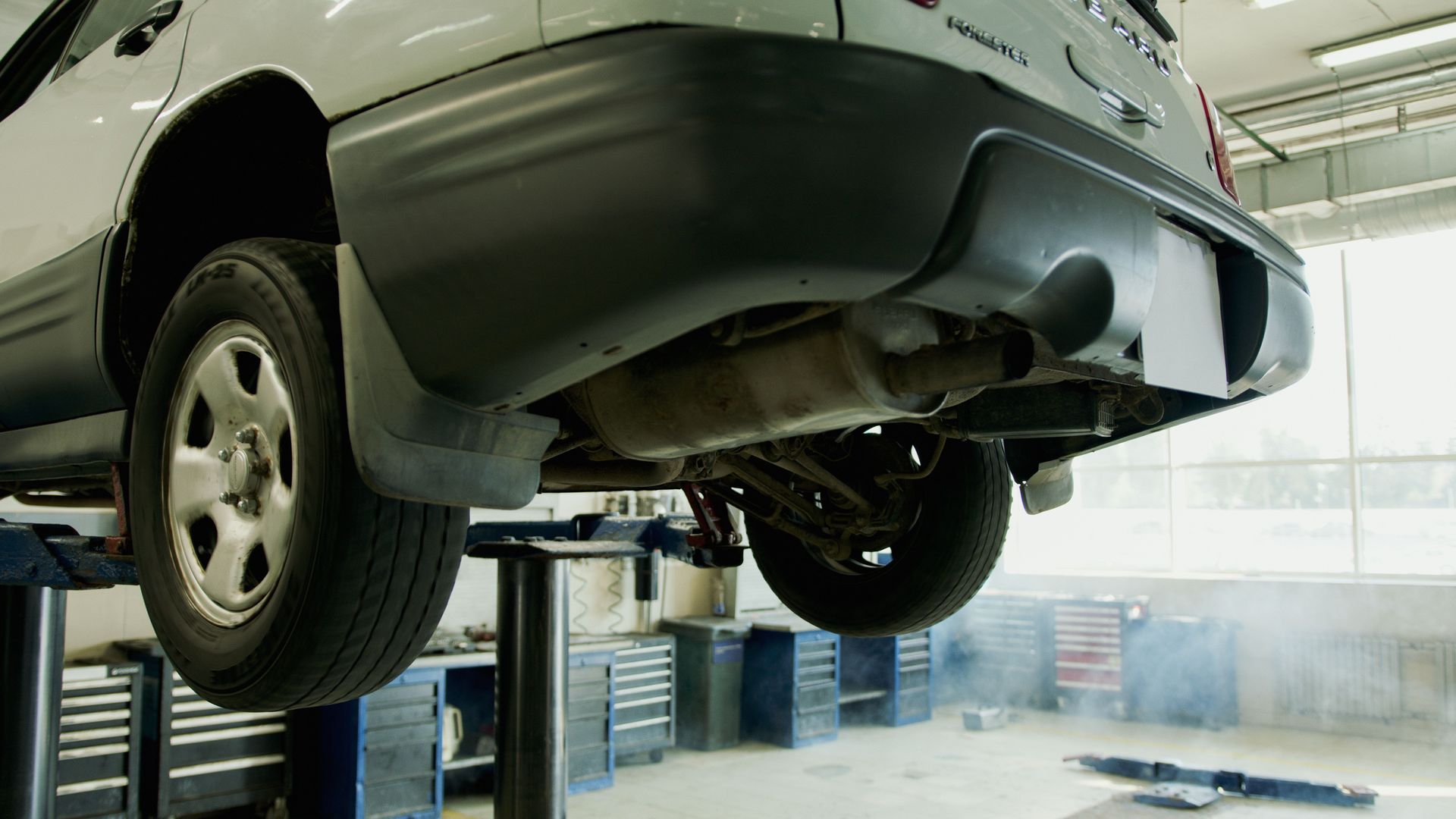
Rust forms when bare steel is exposed to moisture and oxygen over time, and understanding the causes of rust is the first step in classic car rust prevention. Surface rust is the early stage, while deeper corrosion can spread into the steel and under paint. Older classics rust faster because coatings crack, seams hold water, and bare metal becomes exposed more easily. Moisture and air drive the chemical reaction, trapped dirt keeps it active, and untreated corrosion can progress into more serious damage if moisture and contaminants remain present.
Expert Insight:
"On a classic, the rust that ends a restoration usually starts inside a rocker panel or frame rail, not on the panel in plain sight, which is why cavity coverage matters as much as a clean underbody." -
New England Rust Defenders Team
How Do Moisture, Salt, and Condensation Speed Up Corrosion?
Road salt, brine, and condensation speed up corrosion by keeping metal wet and electrically conductive long after a drive ends.
Car rust from salt accelerates most in wheel wells and seams, where mud and water collect, and even short drives leave contaminated moisture on the undercarriage. Temperature swings create condensation on cool steel during storage or after driving, and that moisture settles inside seams, brackets, and hidden edges for hours. Because wheel wells and seams trap dirt, salt, and water, corrosion can remain active longer than on exposed panels.
What Storage Conditions Prevent Rust?
A climate-controlled garage provides a more stable storage environment for a classic car because it limits temperature swings and the wet-dry cycling that feeds corrosion.
For long-term storage:
- Stable temperature and humidity: Help reduce condensation and wet-dry cycling.
- Dehumidifier: Helps keep humidity under control inside the garage.
- Desiccants: Absorb additional atmospheric moisture in enclosed storage areas.
- Breathable car cover: Allows air circulation around the vehicle.
- Plastic sheet: Should not be placed directly against the body because it can trap moisture.
- Vapor corrosion-inhibitor products: Add another layer of protection for stored vehicles and enclosed parts.
Long-term storage works best when the car stays clean, dry, and slightly ventilated, because trapped moisture in one area can undermine otherwise careful rust prevention.
How Do Cleaning and Drying Reduce Rust Risk?
An undercarriage wash followed by thorough drying removes the corrosive contaminants that keep steel wet inside seams and wheel wells. The wash clears road salt from wheel wells, seams, and frame edges before buildup starts eating metal, and regular rinsing cuts the time contaminants sit on the car. Drying then stops trapped moisture from starting new rust spots, and compressed air, microfiber towels, and open-door drying all help finish the job. The goal is to remove trapped water from seams, drains, and pinch welds as soon as possible after washing.
What Prep Steps Come Before Rust Protection?
Rust protection bonds best after loose rust, scale, and old paint are removed, so surface prep plays a major role in how long a coating lasts. The basic preparation process is:
- Remove loose rust and scale: Wire brushing and scraping prepare the metal and expose areas that need further treatment.
- Clean the surface: Clean edges help primers and protective coatings bond while reducing the chance of hidden rust continuing underneath.
- Treat light surface rust: A rust converter can stabilize light corrosion by treating the oxidized layer, but it is not intended for flaking scale.
- Use grit blasting for severe corrosion: Grit blasting can be appropriate when severe corrosion needs to be removed back to clean metal, particularly on frames, brackets, and badly scaled floor supports.
- Repair rusted-through metal: Owners rebuilding rusted-through panels can follow the same welding and patch-panel steps covered in how to repair rust on a truck.
Which Rustproofing Products Work on Classic Cars?
Rust converters, encapsulators, lanolin-based coatings, and penetrating oil undercoatings each address a different rust problem on classic steel. Rust converters stabilize light surface rust by treating the oxidized layer, while moisture-cured urethane rust encapsulators seal prepped, rusted metal and help block oxygen from reaching the surface. Some restoration work also uses tannic acid to treat thin corrosion, but these approaches are better suited to light or stable corrosion than flaking scale. Lanolin-based coatings stay pliable and resist cracking, making them suitable for cars exposed to vibration, road spray, and seasonal storage.
New England Rust Defenders applies
NH Oil undercoating to classics that still carry rust because the oil penetrates seams and crevices, helps displace moisture, and creeps into cavities where brushes cannot reach. It also protects vinyl and plastic surfaces, lubricates moving parts, and takes roughly one hour per vehicle when applied once a year. For a classic that has already rusted through, Rustoration® removes and stabilizes the corrosion before protective coatings are applied.
Boss Wax & Oil, by contrast, is designed for clean, rust-free undercarriages, making it a better fit for a new vehicle than an older car with existing rust.
| Product Type | Main Use | Best Fit |
|---|---|---|
| Rust converter | Stabilizes light surface rust | Small, stable rusted areas |
| Moisture-cured urethane encapsulator | Seals prepped rusted metal from oxygen | Stable rusted panels |
| Lanolin-based coating | Pliable underbody barrier | Seasonal underbody and vibration areas |
| NH Oil undercoating | Penetrating oil for seams and cavities | Classics with existing or developing rust |
| Cavity wax | Internal protection for hollow sections | Rocker panels, frame rails, door bottoms |
How Do Underbody Wax and Cavity Wax Protect Hidden Panels?
Underbody wax shields the visible chassis, while cavity wax reaches hollow rocker panels and frame rails that can rust from the inside out. Underbody wax coats the chassis and floor pans with a flexible barrier against water and salt that resists cracking from road spray and vibration. This matters because the exposed underside takes the most abuse.
Cavity wax protects rocker panels, frame rails, and door bottoms from the inside. A 360-degree spray tip forces the wax through seams and into deep cavities that brushes cannot reach. These sections can be structural and difficult to inspect, so moisture trapped inside them can allow corrosion to spread unnoticed.
What Is the Difference Between Undercoating and Rustproofing?
Undercoating protects the visible underside, while rustproofing also reaches internal cavities and seams that trap moisture. Undercoating is often a surface layer on the chassis and floor pans, whereas rustproofing must reach hidden cavities to protect structural sections long term.
A classic may benefit from both layers, because the underside takes direct spray and the hidden cavities trap moisture, and one without the other leaves weak spots in the plan. Owners comparing coatings by exposure level can explore different undercoating options
| Protection Type | Coverage Area | Main Goal | Typical Product |
|---|---|---|---|
| Undercoating | Visible underside, chassis, floor pans | Block water, salt, and abrasion | Underbody wax or NH Oil |
| Rustproofing | Hidden cavities, seams, rocker panels, frame rails | Stop corrosion inside closed panels | Cavity wax |
For a classic exposed to New England winters, combining underbody and cavity protection provides broader coverage against road salt and moisture.
How Often Should a Classic Car Be Inspected and Recoated?
A classic car needs an annual inspection to confirm coating integrity, with extra attention to areas exposed to road spray and trapped moisture:
- Wheel wells: Check for coating wear, salt buildup, and new rust.
- Seams and drain points: Look for trapped moisture and corrosion.
- Chipped or worn coating: Touch up exposed areas before bare metal remains unprotected.
- After winter use: Inspect again if the car was exposed to road salt.
Recoating frequency depends on salt exposure, storage conditions, and driving patterns, and a classic driven through winter often needs touch-ups after one season. New England Rust Defenders recommends touching up any worn spot as soon as bare metal shows, and owners unsure whether corrosion has reached structure can review the signs of structural frame rust.
What to Do Next
Send New England Rust Defenders 2-3 photos of your current vehicle, including the underbody, wheel wells, and any bubbling paint, to get a repair-versus-protection assessment and a detailed quote before storage season begins.
Undercoating service in East Bridgewater, MA, covers underbody wax, cavity wax, and NH Oil treatment for classic cars that still carry existing rust.
Frequently Asked Questions
About New England Rust Defenders
The New England Rust Defenders Team is a Service-Disabled Veteran-Owned Business (SBA-certified) in East Bridgewater, MA. The team specializes in car rust repair, frame assessment, patch-panel work, and annual undercoating with NH Oil and Boss Wax & Oil.
Last updated: August 2026
You might also like