How Much Does It Cost to Undercoat a Truck? Cost Breakdown
Undercoating a truck costs roughly $350 to $600 for most pickups, with final pricing driven by vehicle size, existing rust, and the coating system chosen. A standard pickup starts near $350, while a medium or heavy-duty chassis climbs toward $600. This guide breaks down every cost factor so budgeting for salt-belt protection stays clear.
Key Takeaways
- Most pickup trucks cost about $350 to undercoat, while medium and heavy-duty trucks range from $400 to $600 by vehicle size.
- Vehicle size drives undercoating price more than any other single factor, since larger frames add surface area, product, and labor.
- Existing rust raises the price because corroded metal must be cleaned or treated before coating can bond to bare steel.
- Oil-based undercoating such as NH Oil stays flexible year-round, which suits daily-driven trucks across the New England salt belt.
- Professional undercoating usually finishes in 1.5 to 2 hours, and the truck is typically drivable within about two hours.
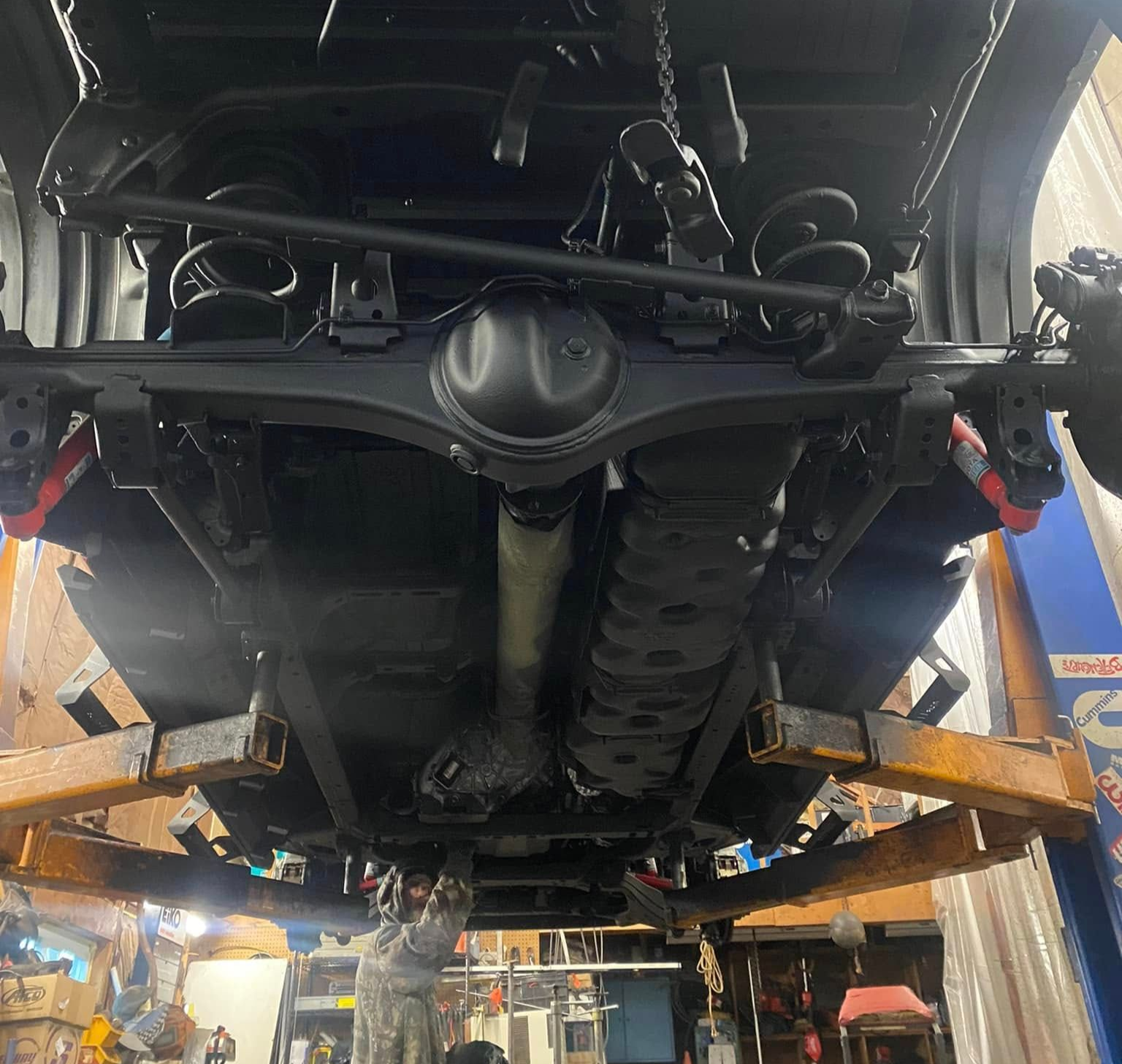
How Much Does It Cost to Undercoat a Truck?
Truck undercoating costs about
$350 to $600 for most trucks, with the exact figure set by vehicle size and underbody condition. Price climbs with wheelbase and frame area because a full-size truck simply has more square footage to clean, mask, and coat than a crossover. The representative tiers below show how cost scales from the smallest vehicles up to heavy-duty chassis.
| Vehicle Type | Typical Cost | Why It Costs That Much |
|---|---|---|
| Sedan/crossover | ~$300 | Smallest underbody, least material used |
| Pickup truck / SUV | $350+ | More surface area and longer prep time |
| 1-ton dump/flatbed | $400+ | Heavy-duty frame and broader coverage |
| Medium/heavy-duty truck | $400 to $600 | More labor, more product, more masking |
| Fleet (5+ vehicles) | Custom quote | Priced per vehicle, not flat-rate |
Fleet work changes the math entirely, since commercial owners need per-vehicle breakdowns rather than a single sticker price.
What Factors Affect Truck Undercoating Cost?
Truck undercoating price is shaped by five main factors: vehicle size, coating type, surface prep, coverage extent, and existing rust. Each one changes how much product goes down and how long the application takes. Vehicle size sets the baseline, coating type determines material cost and reapplication schedule, and coverage extent decides whether the job reaches frame rails, wheel wells, and body cavities or stops at the obvious surfaces. Vehicle size is also why car undercoating near Fall River comes in below a full-size truck: a sedan or crossover simply has less frame area to coat.
Surface prep is the quiet cost driver. Dirt, salt buildup, and corrosion all have to come off before any coating bonds, so a truck that arrives caked in winter grime needs more cleaning labor than one that is already clean. The coating can only adhere to bare, sound metal, which is why a proper application always begins with inspection rather than spraying.
How Does Existing Rust Change the Price?
Existing rust raises the cost because corroded metal has to be cleaned, removed, or restored before coating goes on. That remediation adds labor, and the extra time protects the new coating from failing early. Spraying over active rust is counterproductive because a coating applied over corrosion can trap moisture and salt against the metal, hiding the problem instead of stopping it.
Undercoating prevents future rust on metal still worth protecting; it does not repair structural damage or perforation. When corrosion is already present, remediation comes first.
How Do Undercoating Types Compare on Cost and Protection?
Oil-based and hard-shell (rubberized) coatings carry different prices, maintenance needs, and real-world performance in the salt belt. Oil-based undercoating penetrates seams and stays flexible, while hard-shell products form a thick surface layer built more for impact than for deep penetration. The table below compares how each handles New England winters.
| Feature | Oil-based (e.g., NH Oil) | Rubberized/hard-shell |
|---|---|---|
| Penetrates seams | Yes, wicks into crevices | No, bridges over them |
| Self-healing | Yes, re-flows into gaps | No, cracks trap moisture |
| Cold-weather behavior | Stays flexible year-round | Hardens; can crack in cold |
| Reapplication | About annual | One-time, but cracks let rust in underneath |
| Best suited for | Daily-driven salt-belt trucks | Off-road impact protection |
Expert Insight:
“Massachusetts brine, which is calcium chloride and magnesium chloride, stays active on the undercarriage long after the road dries,” explain the technicians at
New England Rust Defenders.
“That’s why oil-based undercoating earns its price in the salt belt: it penetrates seams, displaces trapped moisture, and stays flexible year-round instead of cracking in the cold the way a hard shell can.”
That self-healing behavior is the core reason oil-based products are widely favored for trucks that live through repeated winters, rather than for one-time off-road use.
What Does Truck Undercoating Protect?
Truck undercoating shields the underbody from moisture, road salt, and corrosive brine by sealing the components that sit lowest and collect the most winter spray. The coating reaches frame rails, floor pans, suspension components, brake lines, and exhaust hangers, forming a flexible barrier that displaces moisture before it can start oxidation. When a rodent-deterrent variant like NH Oil Mouse-Out® is selected, coverage extends into wiring harnesses and body cavities as well. The protection goal is simple: slow corrosion before surface rust reaches structural metal. Owners of full-size pickups and work trucks can book
truck undercoating near Berkley to cover the chassis and undercarriage before winter arrives.
How Long Does Truck Undercoating Last, and What Does Upkeep Cost?
Oil-based truck undercoating typically lasts about one year before a refresh is recommended, which makes maintenance timing part of the true ownership cost. Because the fluid film stays active and keeps wicking into seams, annual reapplication maintains the barrier through each salt season rather than letting it thin out. Mileage, washing habits, and winter exposure all affect how quickly the film wears, so the right reapplication interval depends on how hard the truck is driven.
How Long Does the Undercoating Service Take?
Most truck undercoating appointments take about
1.5 to 2 hours, including inspection, cleaning, and application. The coating sets enough for the truck to be driven within roughly two hours, while a fuller cure continues over the following day. A typical professional application follows four stages: inspection and cleaning, preparation and rust check, controlled application, and drying. Heavier rust prep or a larger frame extends that window, so daily-driver owners should plan for a little extra time.
Is Undercoating a Truck Worth the Cost in the Salt Belt?
Undercoating is worth the cost for New England trucks because rust prevention is far cheaper than rust repair. A $350 to $600 treatment can help a truck avoid thousands in corrosion damage, and the Northeast salt belt, where roads are treated with calcium and magnesium chloride brine, creates harsher conditions than most regions. Oil-based undercoating is especially well matched to vehicles that face repeated moisture and road salt. Trucks kept through several winters, and newer trucks still structurally solid, see the strongest return. Owners still deciding can weigh the full
pros and cons of undercoating before committing.
Does Professional Undercoating Cost More Than a DIY Kit?
Professional undercoating costs more than a DIY kit, but the gap reflects coverage quality and prep work. A professional service cleans the underbody, masks brake lines and sensors, and applies coating in even passes across frame rails and cavities. DIY kits are cheaper upfront yet rarely match that consistency, and the missed spots become rust points during a New England winter. On a truck full of seams, hardware, and hidden cavities, uniform coverage is exactly what prevents early corrosion, which is why many owners choose professional
undercoating for trucks over a weekend spray job.
Get a Condition-Based Quote Instead of a Flat Rate
For a price matched to your exact truck rather than a generic menu number, send
New England Rust Defenders 2-3 photos of your current vehicle, showing the underbody, the wheel wells, and any visible rust, and get an estimate built around real condition and size.
Undercoating service in East Bridgewater, MA covers most of Plymouth, Bristol, and Norfolk counties by appointment, so a quick photo quote is the fastest way to see where a specific truck lands in the $350 to $600 range.
Frequently Asked Questions
About New England Rust Defenders
New England Rust Defenders is a service-disabled veteran-owned team based in East Bridgewater, MA, with years of hands-on experience fighting road-salt corrosion. The shop specializes in oil-based undercoating alongside rust restoration and wax protection, serving truck, car, and RV owners across Plymouth, Bristol, and Norfolk counties.
You might also like