What Bad Frame Rust Looks Like: Signs of Bad Frame Rust
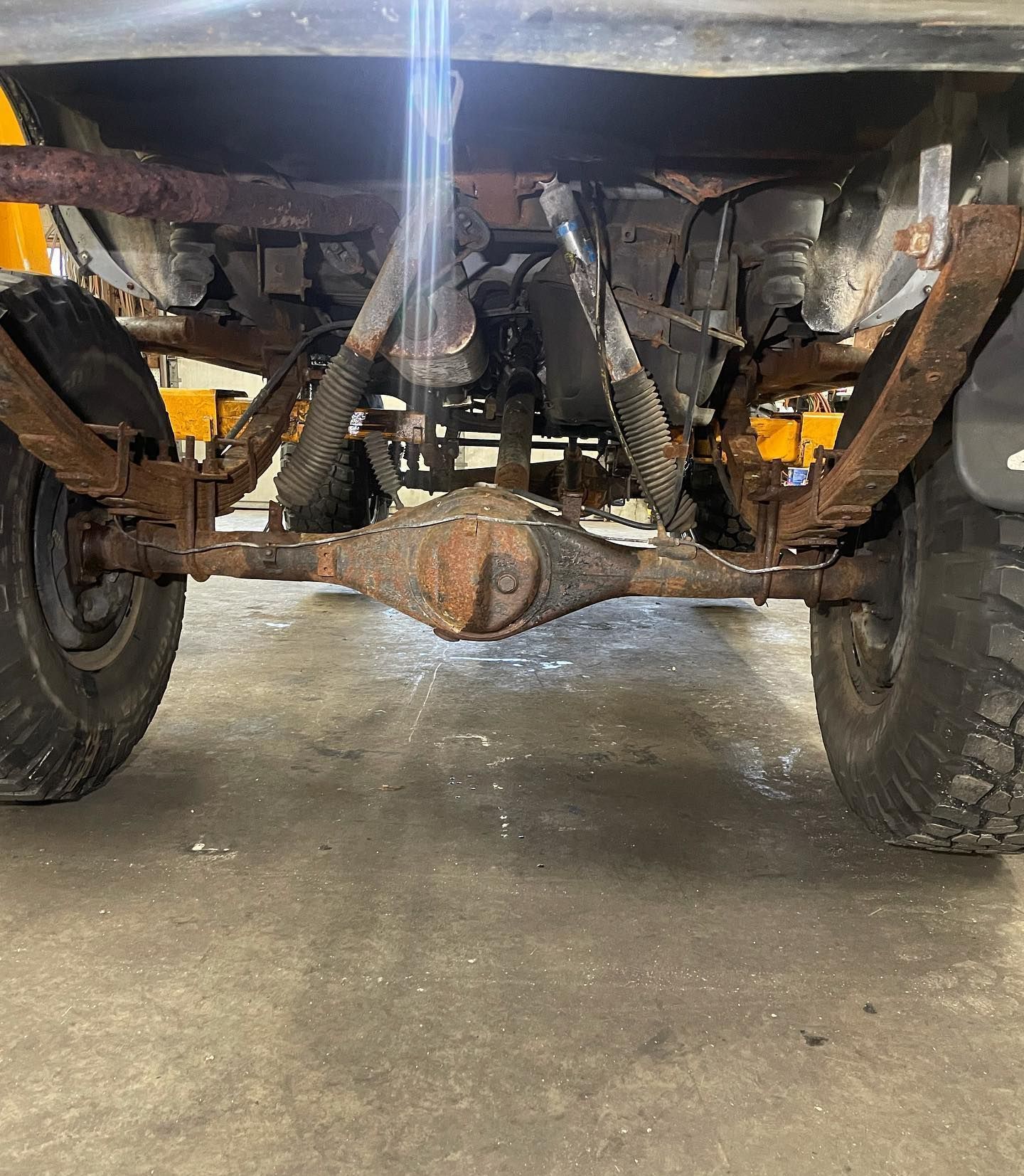
Bad frame rust looks like orange-brown staining that progresses into flaking, bubbling, and holes punched clean through structural steel. Early surface rust sits flat on the metal, but penetrating frame rot weakens load-bearing rails and can compromise crash safety long before the damage is obvious from a standing position.
Key Takeaways
- Bad frame rust shows as orange-brown staining first, then flaky scale, bubbled coating, and eventually perforation through frame rails and rocker panels.
- Surface rust stays flat and cosmetic, while penetrating rust (frame rot) weakens load-bearing steel and crash structure.
- A screwdriver test confirms severity: solid steel resists, but failing metal flakes off or punches through under light pressure.
- Road salt and de-icing brine drive frame corrosion across New England, concentrating in wheel wells, cross-members, and boxed frame sections.
- Annual oil-based undercoating, such as NH Oil, penetrates seams and displaces moisture to slow rust before it becomes structural.
What Does Bad Frame Rust Look Like?
Bad frame rust looks like rough, orange-brown discoloration that advances through flaky scale, blistered coating, and finally holes eaten through the steel. The surface turns coarse and fragile along frame rails and rocker panels, and severe corrosion lifts paint or undercoating into visible blisters. When a coating bubble flakes away to expose crumbling metal, or a hole opens near the gas tank or a frame rail, the corrosion has moved well past cosmetic.
Rust-through rarely stays small. Water enters the opening, spreads corrosion behind the visible edge, and enlarges the damage each freeze-thaw season. The most deceptive cases hide under thick coating or fresh paint: a clean-looking underbody can still conceal perforation inside boxed frame sections, where trapped moisture keeps the metal corroding out of sight.
Surface Rust vs. Penetrating Rust
Surface rust is flat, cosmetic oxidation that stays on the outer layer of the steel, while penetrating rust (frame rot) flakes, bubbles, and breaks through metal that carries load. The distinction is structural, not cosmetic. Surface rust can be treated early; penetrating rust usually demands cutting, welding, or section replacement because the steel has already lost thickness and strength.
| Rust type | Appearance | Texture | Structural impact | Typical response |
|---|---|---|---|---|
| Surface rust | Flat orange-brown spotting on paint or coating | Smooth to lightly rough | Does not compromise structural integrity | Clean, treat, seal early |
| Penetrating rust (frame rot) | Flaky scale, bubbled coating, holes through steel | Rough, pitted, fragile | Weakens load-bearing steel; risk of sag or snap | Cut out, weld patch panels, or replace section |
Where Does Frame Rust Usually Appear?
Frame rust appears most often in wheel wells, rocker panels, frame rails, cross-members, the undercarriage near the gas tank, and suspension mounting points. These zones trap the salt, grit, and brine thrown up by tires through every winter drive. Hidden corrosion frequently starts inside boxed frame sections and behind undercoating, where trapped moisture has no path to escape.
| Zone | Why it rusts | Difficulty to spot |
|---|---|---|
| Wheel wells & rocker panels | Constant tire spray and brine | Visible with a light |
| Frame rails & cross-members | Mud and brine pack inside seams | Partly hidden |
| Boxed frame sections | Moisture trapped internally | Hidden (needs a mirror) |
| Suspension mounting points | Metal stays wet and stressed | Partly hidden |
| Area near the gas tank | Debris collects, drainage is poor | Visible to partly hidden |
How Do You Inspect a Frame for Rust?
A frame inspection begins with a bright-light visual pass under the vehicle, followed by a screwdriver or pick test that probes whether the steel is solid, flaky, or soft. The screwdriver test is decisive: sound metal resists firm pressure, while failing metal sheds large flakes or punches through like cardboard. If a frame rail gives way under light force, the corrosion has penetrated beyond the surface.
Uneven panel gaps, binding doors, and twisted-looking frame sections add further evidence of structural compromise. A mirror and flashlight expose rust hiding behind undercoating or inside boxed rails. The inspection works best with the vehicle on level ground and viewed from both sides, with attention paid to frame rails, suspension mounts, and the metal near the gas tank.
Expert insight: Technicians at New England Rust Defenders report that the worst frame damage they grade almost always starts hidden, inside boxed frame rails and behind undercoating, where trapped brine keeps corrosion active all winter. By the time a rust-through hole shows on the outside, the steel has usually been eaten from the inside out.
Warning Signs Frame Rust Is Affecting Performance
Frame rust affects performance when the vehicle begins to pull to one side, wears tires unevenly, or develops doors and windows that no longer close squarely. These symptoms appear because a weakened frame can no longer hold the body and suspension in their designed positions. Alignment shifts, suspension geometry changes, and load distribution becomes uneven.
On unibody vehicles, misaligned door and window openings are especially telling, since the body itself carries structural load. Uneven tire wear often surfaces the problem before the rust is even noticed. At this stage, the issue is no longer cosmetic, because the structure is signaling that corrosion has reached load paths.
What Causes Frame Rust?
Frame rust is caused by road salt and de-icing chemicals, trapped moisture and humidity, and breaks in protective paint or coating that expose bare steel. New England winters stack all three causes of rust at once. Chloride-based salt is especially aggressive because it holds water against the metal and keeps the electrochemical corrosion reaction active far longer than rain alone would.
Even small stone chips matter. A scratch on a frame rail or rocker panel becomes a starting point for deeper corrosion after repeated freeze-thaw cycles. That is why a truck or SUV that looks clean in summer can still hide advancing underbody rot. Vehicles driven year-round through salted roads need frequent undercarriage washing; without it, isolated spots spread into structural sections that are far harder to repair.
Why Bad Frame Rust Is a Safety Risk
Bad frame rust is a safety risk because a corroded frame can sag during normal driving, respond unpredictably in a collision, and reduce the occupant protection the structure was engineered to provide. Crash protection depends on strong, continuous load paths; when corrosion thins the steel, impact forces route through weakened sections instead of solid metal.
Everyday driving suffers too. A sagging frame changes alignment, tire contact, and suspension geometry, and the vehicle may drift or sit unevenly well before any complete failure. Rust at this level should be treated as urgent, since the next hard winter can turn a weak section into a failed one. If the frame already shows these signs,
frame rust repair near Plymouth can address the damage before winter returns.
Can Bad Frame Rust Be Repaired?
Bad frame rust can often be repaired when enough sound, load-bearing steel remains to anchor new metal, but widespread perforation usually pushes a vehicle toward section replacement or retirement. Repair methods scale with severity: localized rust-through is typically addressed by cutting out the compromised area and welding in new steel patch panels, while advanced corrosion may require replacing entire frame sections. A professional rust repair team serving Quincy can measure how far the corrosion has spread and confirm which route fits.
Welded repairs only hold when the surrounding frame is still strong enough to support new steel, which is why a professional assessment, not a cosmetic glance, determines whether a frame is a repair candidate. Because frame work is specialized and safety-critical, costs vary widely by vehicle, extent of rust, and region, so a shop inspection is the only reliable way to get an accurate figure. If the frame is already perforated, understanding
how to fix rust on a car helps set realistic expectations before any work begins.
How Can Frame Rust Be Prevented?
Frame rust is best prevented with regular undercarriage washing, an annual oil-based undercoating, routine seasonal inspections, and cavity treatment that keeps moisture out of boxed sections. Washing removes road salt and de-icing brine before they dry and pull water against bare steel; inspections catch bubbling, scale, and soft spots early, which is often the key to stopping rust from spreading before it becomes structural.
Oil-based undercoating, such as NH Oil undercoating, is engineered to creep into seams, welds, and frame cavities, displace existing moisture, and leave a self-healing film that reaches the hidden areas spray-on coatings often miss. It also lubricates moving parts and is typically reapplied once a year in a process that takes about an hour per vehicle. Prevention works best as a routine rather than a one-time fix, so it helps to understand whether undercoating actually prevents rust and how long oil undercoating lasts before the next salt season begins. Drivers on the South Coast can schedule that oil undercoating through
rust protection services near Fall River.
Comparing these details is more useful than choosing a shop based on the lowest headline price alone.
Not Sure If Your Frame Has Crossed the Line?
Still unsure whether a frame has moved from surface rust into structural territory?
Send
New England Rust Defenders 2-3 photos of your current vehicle and get a straight read on exactly where that frame stands. A professional
rust repair service in East Bridgewater can grade the corrosion, flag any perforation, and map the route from assessment to a sealed, protected undercarriage.
FAQs
About New England Rust Defenders
New England Rust Defenders is a team of corrosion-protection specialists in East Bridgewater, Massachusetts, with years of hands-on experience in car rust repair and restoration. Alongside their Rustoration rust repair service, they provide oil-based undercoating and underbody protection for drivers across the South Shore and southeastern Massachusetts.
You might also like