How to Fix Rust on a Car: Stage-by-Stage Repair Guide
How to fix rust on a car depends entirely on how deep the corrosion has penetrated. Surface rust (Stage 1) costs $50-$300 and can be sanded, primed, and repainted in a day. Scale rust (Stage 2) requires grinding to bare metal, body filler, and epoxy primer, typically a two-day job. Penetrating rust (Stage 3) means panel replacement and $1,500 or more. This guide covers all three stages, the right materials for each, and when a DIY repair will actually last.
Key Takeaways
- Rust progresses through 3 stages: surface, scale, and penetrating. Each requires a different repair method and budget.
- Stage 1 surface rust costs $50-$300 to fix and is DIY-friendly with the right primer and paint preparation.
- Stage 2 scale rust requires grinding to bare metal, body filler, and epoxy primer, with a minimum of 6-12 hours of labor.
- Stage 3 penetrating rust creates holes in metal and requires panel replacement at $1,500-$5,000+.
- Salt-road states like New Hampshire and Maine accelerate Stage 2 rust within 3-5 winters on untreated vehicles.
The 3 Stages of Car Rust Explained
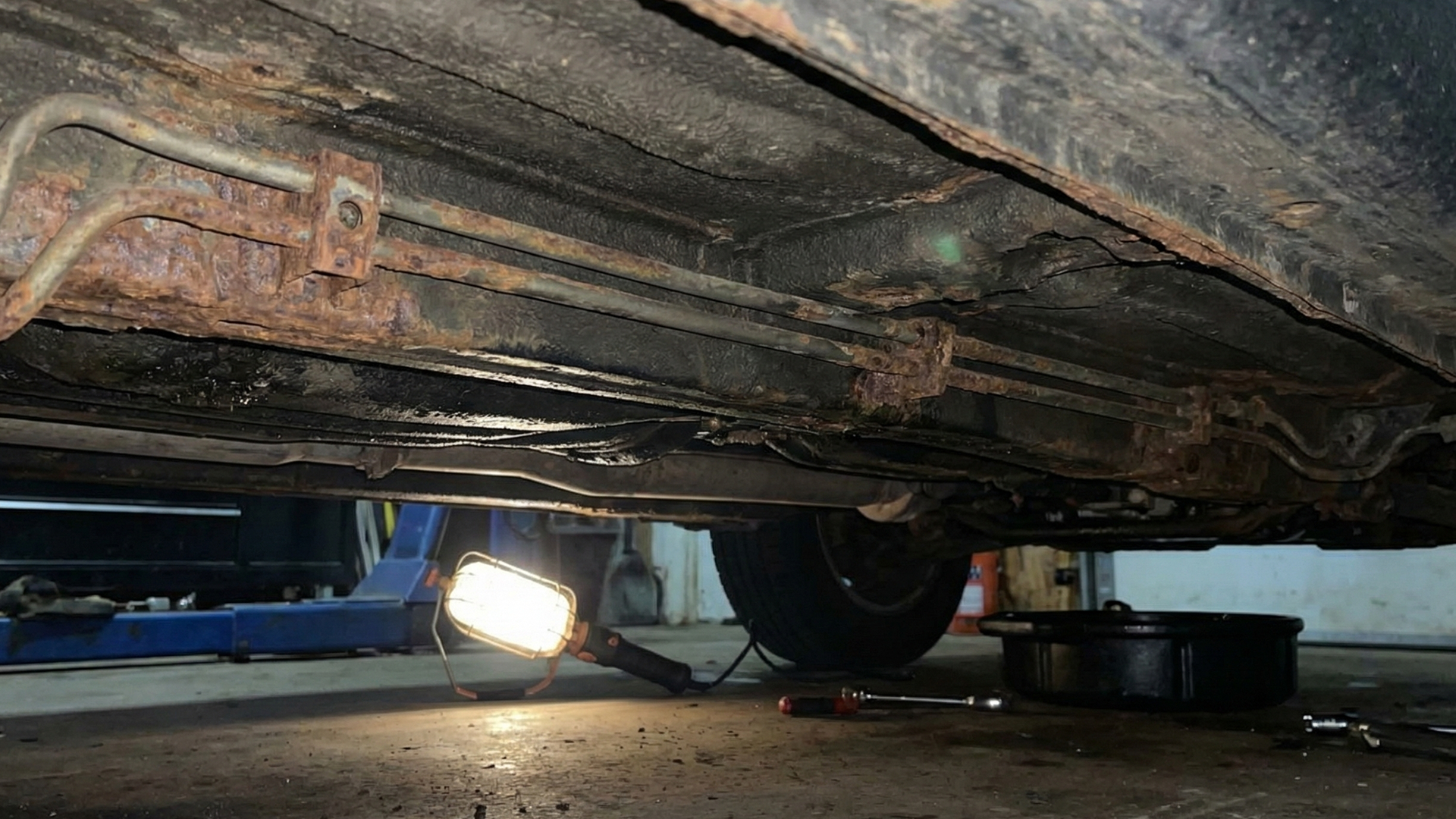
Car rust falls into three progressive stages: surface, scale, and penetrating. The stage determines the repair method and budget required.
| Stage | What it looks like | Typical repair cost |
|---|---|---|
| Stage 1 - Surface | Orange/brown staining on the paint surface | $50-$300 |
| Stage 2 - Scale | Bubbling paint, pitting, flaking metal | $300-$1,500 |
| Stage 3 - Penetrating | Holes, structural weakening, rust-through | $1,500-$5,000+ |
Road salt is one of the most common causes of rust in New England, accelerating electrochemical corrosion faster than in drier climates. Rust that takes 5 years to develop elsewhere can appear in just 2 winters in New Hampshire or Maine.
How to Fix Stage 2 Scale Rust: Step-by-Step
Scale rust requires grinding to bare metal with an angle grinder, body filler, and epoxy primer. Expect 6-12 hours of hands-on time across two days minimum.
1. Grind to bare metal
Fit an angle grinder with a 36 or 60 grit flap disc and grind until clean, shiny metal is exposed with no pitting, flaking, or rust discoloration. Wear a P100 respirator as grinding rust creates fine ferrous particles.
2. Seal with epoxy primer
Before applying body filler, apply 2 coats of epoxy primer to the bare metal. Allow 30-60 minutes to a tacky-dry state. Body filler bonds better to slightly tacky epoxy than to fully cured primer.
3. Apply body filler
Mix automotive body filler putty with hardener at a 50:1 ratio and apply with a flexible plastic spreader in layers no thicker than 3-4 mm. Cure time is 15-25 minutes at 70 degrees F. Apply a second coat only after the first is fully sanded back with 80-grit.
4. Block sand and feather
Use a sanding block rather than your bare hand, working from 80 to 150 to 320 grit. Feather filler edges 3-6 inches into the surrounding paint. Fill pinholes with spot putty and finish at 400 grit.
5. Prime, color, and clear
Apply 2 coats of high-build urethane primer, sand to 600 grit, then color coat and clear as in the Stage 1 process. For panels larger than 12 inches, professional color blending is recommended to avoid a visible repair zone.
Stage 3 Penetrating Rust: When to Call a Professional
Penetrating rust has eaten through the metal entirely. Body filler over holes will flex, crack, and fail within one season, making panel replacement the only durable fix.
Stage 3 rust is identifiable by holes in body panels, rust-through on rocker panels or floor pans, and metal that crumbles when poked with a screwdriver. The correct repair involves cutting out the rusted section 2-4 inches beyond visible rust, welding in new metal, and refinishing the panel. On structural sections such as frame rails, rusted brake lines, and pillars, a certified welder is required to meet safety standards.
Is your rust worth repairing? Get a same-day answer.
Send us 2-3 photos of your vehicle using our quick photo form, and our technicians at New England Rust Defenders will assess the rust stage, outline your repair options, and provide a written estimate.
DIY vs. Professional Rust Repair
DIY rust repair is cost-effective only for Stage 1 surface rust on non-structural panels. Stage 2 repairs without professional equipment typically fail within 2 years.
| Factor | DIY repair | Professional repair |
|---|---|---|
| Rust stage | Surface rust only (Stage 1) | All stages (1-3) |
| Materials cost | $30-$80 | $150-$800+ (labor incl.) |
| Durability | 1-3 years with primer | 5-10+ years with professional coating |
| Best for | Coin-sized surface rust spots | Penetrating rust, rocker panels, and structural areas |
The most common DIY failure New England Rust Defenders sees is body filler applied directly over mill scale without epoxy primer. Filler is porous, and without an epoxy barrier, rust reactivates under the filler within one winter, causing paint bubbling in the same location 6-18 months later.
How to Prevent Rust from Coming Back
Annual undercoating, prompt paint chip repair, and regular washing through salt season are the three most cost-effective ways to stop rust from returning.
- Annual undercoating: NH Oil Undercoating, applied annually to the undercarriage and wheel wells, costs $150-$300 per vehicle, a fraction of a rocker panel replacement. It penetrates existing surface rust and provides a moisture barrier for 10-12 months.
- Repair paint chips immediately: Every exposed chip is a Stage 1 rust site. Touch up chips smaller than a pencil eraser within 30 days using OEM touch-up paint. After 60-90 days in New England's climate, most exposed chips will show orange staining.
- Wash every 2 weeks during salt season: Salt season in New Hampshire, Vermont, and Maine typically runs from November through March. A $15 car wash with undercarriage rinse every two weeks costs $150 per season and can extend a vehicle's rust-free life by years.
Frequently Asked Questions
Last Updated: June 2026
Written by the New England Rust Defenders Team | 157 Washington St, East Bridgewater, MA | 802-870-6373
You might also like