Best Undercoating For Rust Protection: Complete Guide
New England winters are extremely harsh on vehicles. Salt-covered roads and coastal air create the perfect storm for rust. This guide from New England Rust Defenders walks you through choosing the best undercoating for your driving conditions. You'll find a practical inspection checklist, clear reapply schedules, and details on local service options.
Key Takeaways
- Undercoating can significantly reduce corrosion on vehicles exposed to road salt when applied before rust begins.
- The best undercoating depends on rust level, salt exposure, and coating type.
- Lanolin penetrates rust, rubberized coatings protect against impacts, and polyurethane resists heavy salt.
- Oil-based coatings last 6 to 12 months, while rubberized and polyurethane options last 3 to 5 years.
- Inspect the undercarriage monthly in winter and reapply if damage affects over 10% of the coating.
What Is Undercoating And How Does It Protect Your Vehicle?
Undercoating protects a vehicle’s undercarriage by creating a barrier that blocks moisture, salt, and road debris. Some products seal surfaces to block moisture. Others penetrate seams to displace trapped moisture.
When properly applied, undercoating can significantly reduce corrosion on salt-exposed metal surfaces. Drivers who want to understand the full
benefits of vehicle undercoating should consider how these coatings block moisture, salt, and road debris before rust forms.
How To Choose The Best Undercoating: Step-By-Step
Choosing the best undercoating depends on three factors: vehicle condition, salt exposure, and coating type. Follow these three steps to match the correct protection to your vehicle.
Step 1: Assess Vehicle Condition
Inspect the undercarriage for surface rust, exposed seams, and trapped moisture. Vehicles with existing rust require a penetrating undercoating first so the product can reach seams and displace moisture.
Step 2: Assess Salt and Climate Exposure
Estimate how often the vehicle drives on salted roads each year. Low exposure is under 2,000 miles, moderate exposure is 2,000 to 6,000 miles, and high exposure exceeds 6,000 miles or frequent coastal driving, which requires thicker or more durable coatings.
Step 3: Select the Correct Undercoating Type
Choose a coating based on rust level and driving conditions. Lanolin penetrates rusted areas, polyurethane handles heavy salt, and rubberized coatings protect high-impact zones like wheel wells.
Reapplication And Warranty Considerations
Undercoating durability depends on the coating type and environmental exposure.
- Oil-based undercoatings: Reapply every 6 to 12 months
- Rubberized coatings: Last 3 to 5 years
- Polyurethane coatings: Last 3 to 5 years when properly installed
Always inspect the undercarriage annually and repair damaged sections immediately.
Is Lanolin The Best Undercoating For Seams, Cavities, And Tight Spaces?
Lanolin-based undercoatings penetrate seams and displace trapped moisture. Thinner formulas slip into welds more easily. Thicker versions stay pliable and won't run off as quickly. The non-toxic nature is a bonus.
This type works best on vehicles with surface rust or cavities that are tough to reach. Apply enough product to fully coat internal seams and cavities. Allow 24 to 48 hours for full penetration.
You can expect approximately 1 to 3 years of protection depending on salt exposure and driving conditions.
Is Rubberized Coating The Best Undercoating For Wheel Wells And Impact Protection?
Rubberized and asphalt-style coatings build up a protective layer between 1.5 and 3 millimeters thick. That cushion absorbs impacts from flying rocks and road debris.
Focus these coatings on wheel wells, rocker panels, and truck frames. They dampen road noise and need 24 to 72 hours to cure. You can sand them or remove them later if you need to weld or do bodywork.
Is Polyurethane The Best Undercoating For Salty Roads And Coastal Driving?
Polyurethane creates a hard shell that bonds directly to metal and fills small cracks. It outperforms softer films when exposed to heavy salt.
Drivers who travel more than 3,000 miles per year on salted roads should consider polyurethane coatings. Check it once a year and fix any chips within 30 days. The coating can be sanded and painted, which makes body shop repairs easier.
Are Oil-Based Or Wax-Based Products The Best Undercoating For Rust Prevention?
Oil-based sprays penetrate tight spaces and effectively push out trapped moisture, making them a good option for vehicles with existing surface rust. However, they usually require reapplication every 6 to 12 months to maintain consistent protection and may drip for 24 to 72 hours after application.
Wax-based coatings cure into a firmer protective layer that typically lasts 1 to 3 years and provides longer-lasting surface protection.
Both types can reach hidden crevices, but wax coatings are generally better for newer vehicles that need durable coverage, while oil-based coatings are better suited for vehicles that already show light rust.
DIY Application Vs. Professional Undercoating
Vehicle owners can apply undercoating themselves or hire a professional service. The right choice depends on equipment access, coverage quality, and how thoroughly seams and cavities need protection.
| Factor | DIY Undercoating | Professional Undercoating |
|---|---|---|
| Preparation | Requires pressure washing at 2,500 to 3,500 psi and drying for 24 hours before coating. | Shops use industrial cleaning equipment and faster drying systems. |
| Equipment Access | Applied with handheld sprayers or aerosol cans while working under jack stands. | Applied on lifts using professional spray systems that reach frames and cavities. |
| Coverage Quality | May miss tight seams, cavities, and overlapping metal joints. | Reaches internal seams where corrosion commonly starts. |
| Safety | Users must mask components such as brake rotors, catalytic converters, sensors, and steering joints. | Technicians follow standardized masking procedures. |
| Time Required | Usually takes 3 to 5 hours, including cleaning and spraying. | Typically completed in 1 to 2 hours. |
| Estimated Cost | $40–$120 in materials per application | $150–$400, depending on vehicle size and coating type |
| Best Use Case | Suitable for routine maintenance or light rust prevention. | Ideal for deep cavity treatment and vehicles exposed to heavy road salt. |
For vehicles with under 2,000 annual salt-road miles, DIY is a cost-effective option. For anything above that - especially coastal drivers or anyone driving Massachusetts highways between November and April - a professional application pays for itself within the first winter.
How Long Does Undercoating Last?
Most undercoatings last 1 to 5 years, depending on the coating type and exposure to road salt. Understanding the typical undercoating lifespan helps vehicle owners schedule inspections and reapply protection before corrosion starts.
Oil-based products typically require reapplication every 6 to 12 months, while rubberized or polyurethane coatings can last 3 to 5 years when applied correctly. Regular inspections help detect early damage before corrosion spreads. Check the undercarriage once per month during winter or after driving on heavily salted roads.
Inspection Checklist For Undercoating Damage:
- Chips or cracks larger than 5 millimeters in treated areas
- Rust visible through the coating, exposing bare metal
- Bubbling or lifting under the coating layer
- Dripping residue beneath treated cavities
- Loose or missing frame seam plugs
- Heavy road salt buildup on frame rails or suspension components
Repair or reapply the coating if damage affects more than 10% of the treated surface, as exposed metal accelerates corrosion.
Seasonal inspection schedule for New England drivers:
- October: Pre-winter inspection and full reapplication if needed
- January: Mid-winter spot check after heavy salt events
- April: Post-thaw inspection to assess winter damageNew Paragraph
Signs Your Vehicle Needs Undercoating
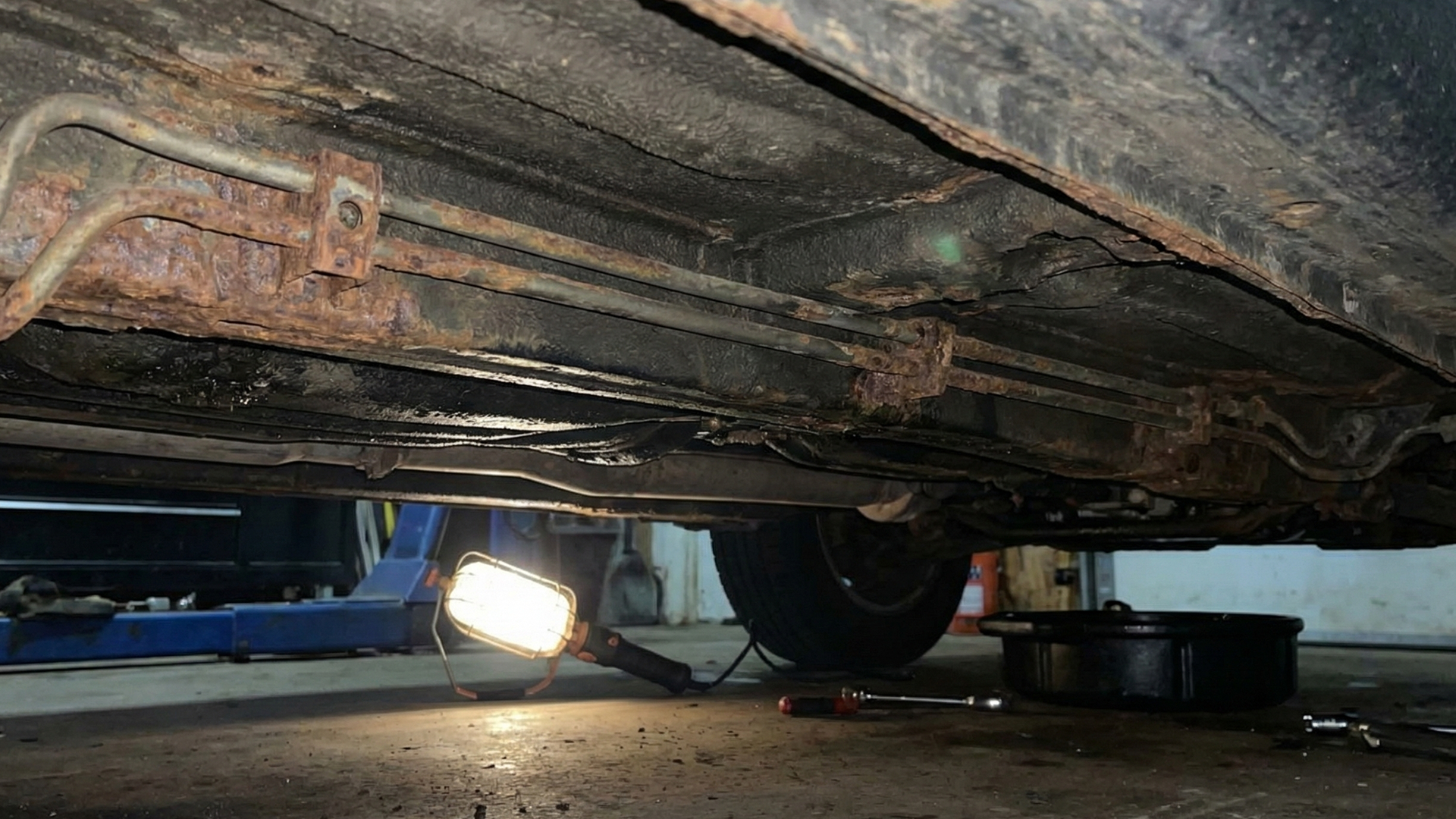
Vehicles usually need undercoating when the undercarriage shows early rust, salt buildup, or worn protective coatings. If left untreated, rust can spread to critical parts, including rusted brake lines, suspension mounts, and structural frame sections.
Applying protection at this stage helps stop corrosion before structural components are affected.
Common warning signs include:
- Light surface rust forming on the frame, suspension arms, or weld seams
- Bare metal exposure where factory coatings have worn away
- Frequent winter driving on salted roads exceeding 2,000 to 3,000 miles per year
- Coastal driving environments where salt air accelerates corrosion
- The previous undercoating is wearing thin or cracking
Drivers in heavy winter climates should inspect the underbody at least twice per year, typically before winter and after the spring thaw, to determine if undercoating protection is needed.
Choosing The Best Undercoating Service Near You
Choosing the right provider ensures your vehicle receives proper surface preparation, full seam coverage, and long-lasting corrosion protection. Drivers looking for car & truck undercoating in East Bridgewater, MA can consider professional services that use thorough cleaning, cavity penetration, and durable coatings.
New England Rust Defenders is a trusted vehicle protection provider offering undercarriage inspections and corrosion prevention services designed for vehicles exposed to New England’s harsh winter road conditions.
Schedule your free undercarriage rust inspection in East Bridgewater today.
FAQs About Undercoating
You might also like