Best Undercoating for Trucks: 2026 Buyer's Guide
The best undercoating for a truck depends on its climate, road-salt exposure, existing rust, desired coverage, and maintenance requirements. Oil-based, rubberized, and wax-based products use different approaches to underbody protection, so no single type is ideal for every truck. This guide compares the main undercoating categories, explains how they differ, and covers product selection, application, maintenance, and typical costs.
Key Takeaways
- Truck undercoating adds a protective layer to the underbody that can help reduce exposure to road salt, moisture, dirt, and other corrosive contaminants.
- Oil-based, rubberized, and wax-based undercoatings differ in penetration, flexibility, surface coverage, and maintenance requirements.
- The most appropriate undercoating depends on the truck's climate, road-salt exposure, existing rust, underbody condition, and the type of protection needed.
- Proper cleaning, inspection, and preparation are important before applying undercoating, especially when existing rust or damaged components are present.
- Undercoating does not repair existing corrosion or structural damage, so significant rust should be assessed and addressed before applying a protective coating.
What Is Truck Undercoating?
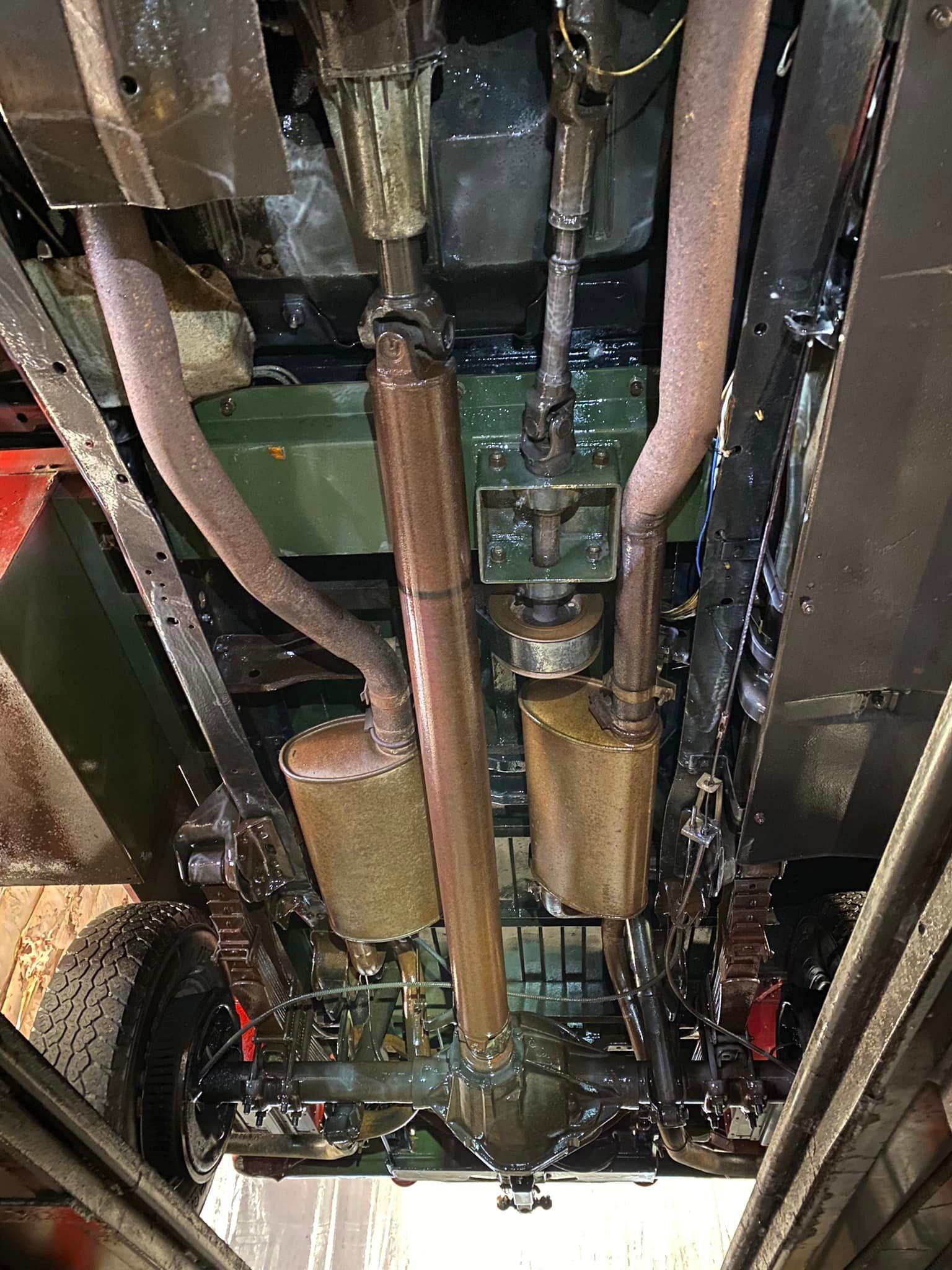
Truck undercoating is a protective coating applied to the underbody to help reduce exposure to moisture, road salt, dirt, and other contaminants that can contribute to corrosion. Coverage may include frame rails, floor pans, suspension components, and other exposed undercarriage areas, depending on the product and application.
Trucks driven in areas where winter road treatments are common can receive repeated exposure to salt and moisture underneath the vehicle. Calcium chloride, magnesium chloride, and other de-icing materials may remain on vehicle surfaces after winter driving, making underbody cleaning and corrosion prevention important parts of maintenance. Undercoating adds another protective layer, but it does not replace inspection or repair of existing rust.
Which Undercoating Is Best for Trucks?
The most appropriate truck undercoating depends on the product's ability to reach the areas that need protection, its flexibility, the vehicle's environment, and its maintenance requirements. Truck owners can choose from several automotive undercoating products, including oil-based, rubberized, and wax-based formulations. Each type differs in how it is applied and how it behaves after application.
| Property | Oil-Based | Rubberized Undercoating | Traditional Wax |
|---|---|---|---|
| Penetrates seams | Can penetrate seams and crevices | Primarily forms a surface coating | Limited penetration depending on product |
| Flexibility | Generally remains flexible | Depends on formulation and conditions | Depends on formulation |
| Surface coverage | Provides a fluid protective film | Forms a thicker surface layer | Forms a wax-based protective layer |
| Maintenance | Often inspected and reapplied periodically | Depends on product condition and application | Depends on product and exposure |
| Best suited for | Vehicles exposed to moisture and road salt | Applications where impact-resistant surface coverage is desired | Prepared surfaces where wax-based protection is appropriate |
| Warranty available | Product-specific | Product-specific | Product-specific |
Oil-based products can be useful where penetration and flexibility are priorities, while thicker surface coatings may be appropriate where surface coverage is the primary goal. Product specifications and vehicle condition should be considered before choosing between these categories.
Why Consider Oil-Based Undercoating for Salt-Belt Trucks?
Oil-based undercoating is commonly used on trucks exposed to road salt because the material can remain flexible and reach seams, joints, and other narrow areas. Unlike a rigid surface coating, an oil-based product can continue to move across the treated surface as the vehicle experiences normal vibration and movement.
NH Oil is one example of an oil-based undercoating product offered by New England Rust Defenders. The company describes its products as high-wicking and designed to reach areas where moisture and contaminants may collect. These characteristics can make an oil-based product worth considering for trucks that regularly operate in winter conditions, but product performance depends on the formulation, preparation, application, and maintenance schedule.
The main consideration is not simply whether one coating category is “best,” but whether its properties match the truck's environment and protection needs. Trucks exposed to frequent road salt may benefit from a product that can reach seams and remain flexible, while other applications may call for a different type of surface protection.
What Does Truck Undercoating Cover?
Truck undercoating can cover multiple underbody areas, although exact coverage depends on the vehicle, product, application method, and components that should remain uncoated. Common areas include:
| Component | What the Coating Can Do |
|---|---|
| Frame rails | Provide protective coverage around exposed metal, seams, and joints |
| Floor pans | Add a protective layer to exposed underside surfaces |
| Suspension components | Cover selected exposed components and mounting areas |
| Brake lines | Protect appropriately prepared external surfaces without interfering with brake function |
| Exhaust hangers | Cover suitable mounts and brackets where product specifications allow |
| Wiring harnesses and body cavities | Some specialty products are designed for selected cavities and areas where additional protection is appropriate |
Not every underbody component should be coated. Braking surfaces, exhaust components exposed to excessive heat, electrical connections, belts, and other sensitive or moving parts may require masking or exclusion during application.
Brake lines also require careful attention because corrosion can weaken the metal and increase the risk of brake failure. Identifying
rusted brake lines during the inspection can help determine whether additional repair or treatment is needed before undercoating. The inspection also helps determine which areas should receive coverage and which should remain untreated.
How Much Does Truck Undercoating Cost?
How much does it cost to undercoat a truck? The answer depends on vehicle size, product type, surface preparation, coverage, and undercarriage condition. New England Rust Defenders currently publishes the following pricing for its oil-based vehicle undercoating:
| Vehicle Class | Published Price |
|---|---|
| Sedan / Cross-Over | $300 |
| Pickup Truck / SUV | $350+ |
| 1-Ton Dump / Flatbed | $400+ |
| Medium / Heavy-Duty Truck | $400 to $600 |
| Fleet (5+ vehicles) | Inquire |
Boss Wax & Oil starts at $1,000 for qualifying new vehicles, according to New England Rust Defenders. An inspection is required before an accurate estimate can be provided, and published pricing may change over time. Preparation requirements or additional rust-related work can also affect the final cost.
NH Oil Variants and the Boss Wax & Oil Option
New England Rust Defenders offers several NH Oil variants, along with Boss Wax & Oil for qualifying new vehicles. Each option has different product characteristics and intended uses.
Back-N-Black
Back-N-Black is the original glossy NH Oil finish and is intended for applications where a darker visible underbody coating is preferred.
Clear Coat
Clear Coat is designed to provide oil-based protection while maintaining a less visible finish. The product is intended to reach seams and crevices across treated metal surfaces.
NH Oil Mouse-Out
NH Oil Mouse-Out is formulated with peppermint and predatory marking oils and is marketed for applications where rodent deterrence is also desired. Its use should follow the manufacturer's product and application instructions.
Boss Wax & Oil
Boss Wax & Oil combines NHOU Boss Wax for external undercarriage surfaces with NHOU Clear Oil Undercoating for selected cavities. New England Rust Defenders lists a lifetime transferable warranty for qualifying brand-new, inspected vehicles. Because the warranty applies under specific conditions, buyers should review the current warranty terms before purchase.
How Is Truck Undercoating Applied?
A typical truck undercoating application involves inspection, cleaning, preparation, product application, and product-specific setting or curing time. The exact process and timing vary according to the coating selected and the condition of the undercarriage.
1. Inspection and Cleaning
The undercarriage is inspected for rust, damaged components, and areas requiring preparation before coating. The vehicle is then cleaned to remove dirt, oil, road film, salt, and other contaminants that could interfere with the application.
2. Preparation
Technicians identify areas that require additional preparation and protect components that should remain uncoated, such as brake rotors and other heat-sensitive, moving, or functional surfaces. Existing significant rust may require repair or treatment before undercoating.
3. Application
The selected undercoating is applied to appropriate underbody areas using equipment suited to the product. Oil-based products may be directed into seams, cavities, and other difficult-to-reach areas where the product is designed to provide coverage.
4. Setting or Curing
The vehicle should remain undisturbed for the period specified for the selected product and application conditions. Oil-based products may remain flexible after application, while wax-based or other surface coatings may require different curing or drying periods.
What Undercoating Will Not Fix
Undercoating helps protect prepared surfaces but does not reverse existing corrosion or repair structural damage. Heavy scale, flaking rust, perforation, damaged frame sections, and other significant corrosion should be assessed before a protective coating is applied.
Applying a protective coating over active corrosion does not remove the underlying rust. Depending on the condition of the metal, the appropriate process may include rust removal, metal treatment, repair, or replacement before undercoating. An undercarriage inspection is therefore an important step before deciding which protection method is appropriate.
Is Truck Undercoating Worth It?
Truck undercoating can be worthwhile for vehicles that regularly encounter road salt, winter moisture, and other corrosive conditions. However, whether undercoating is worth it depends on factors such as exposure, vehicle condition, and maintenance requirements. The potential benefit is generally more relevant when a truck spends significant time on treated roads than when it has minimal exposure to those environments.
The decision also depends on the truck's age, existing corrosion protection, underbody condition, driving habits, and the type of coating being considered. Undercoating should be viewed as one part of a broader maintenance approach that includes underbody cleaning, inspection, and timely rust repair.
Ready to Find the Right Coating for Your Truck?
Choosing a truck undercoating starts with understanding the vehicle's condition, road-salt exposure, desired coverage, and maintenance requirements. New England Rust Defenders provides truck undercoating in East Bridgewater, MA, with oil-based and other undercoating options for different vehicle types. An inspection can help determine whether the truck is ready for undercoating or requires rust repair or preparation first.
Frequently Asked Questions
About New England Rust Defenders
New England Rust Defenders is a Service-Disabled Veteran-Owned vehicle-protection business in East Bridgewater, MA. The company specializes in car rust repair, frame assessment, patch-panel work, and vehicle undercoating using NH Oil and Boss Wax & Oil.
Last updated: September 2026
You might also like