How to Protect Car Wheel Wells From Rust
Protecting car wheel wells from rust means blocking road salt, moisture, and debris before they reach bare metal. In Massachusetts salt-belt winters, intact wheel well liners plus oil undercoating reduce salt exposure and slow corrosion. This guide covers what wheel wells do, why they rust, and how to shield them.
Key Takeaways
- Car wheel wells are the four curved recesses above each tire that shield suspension, brakes, and body panels from road debris.
- In Massachusetts salt-belt winters, wheel wells are among the areas most exposed to road salt, moisture, gravel, and debris, making them common locations for early corrosion.
- Cleaning wheel wells every 1 to 2 months removes road-salt residue before it sits on bare metal.
- Oil undercoating adds a corrosion barrier, and reapplication timing depends on product, vehicle, and salt exposure.
- Intact wheel well liners block impact while undercoating seals seams, so the pair covers more than either alone.
What Are Car Wheel Wells?
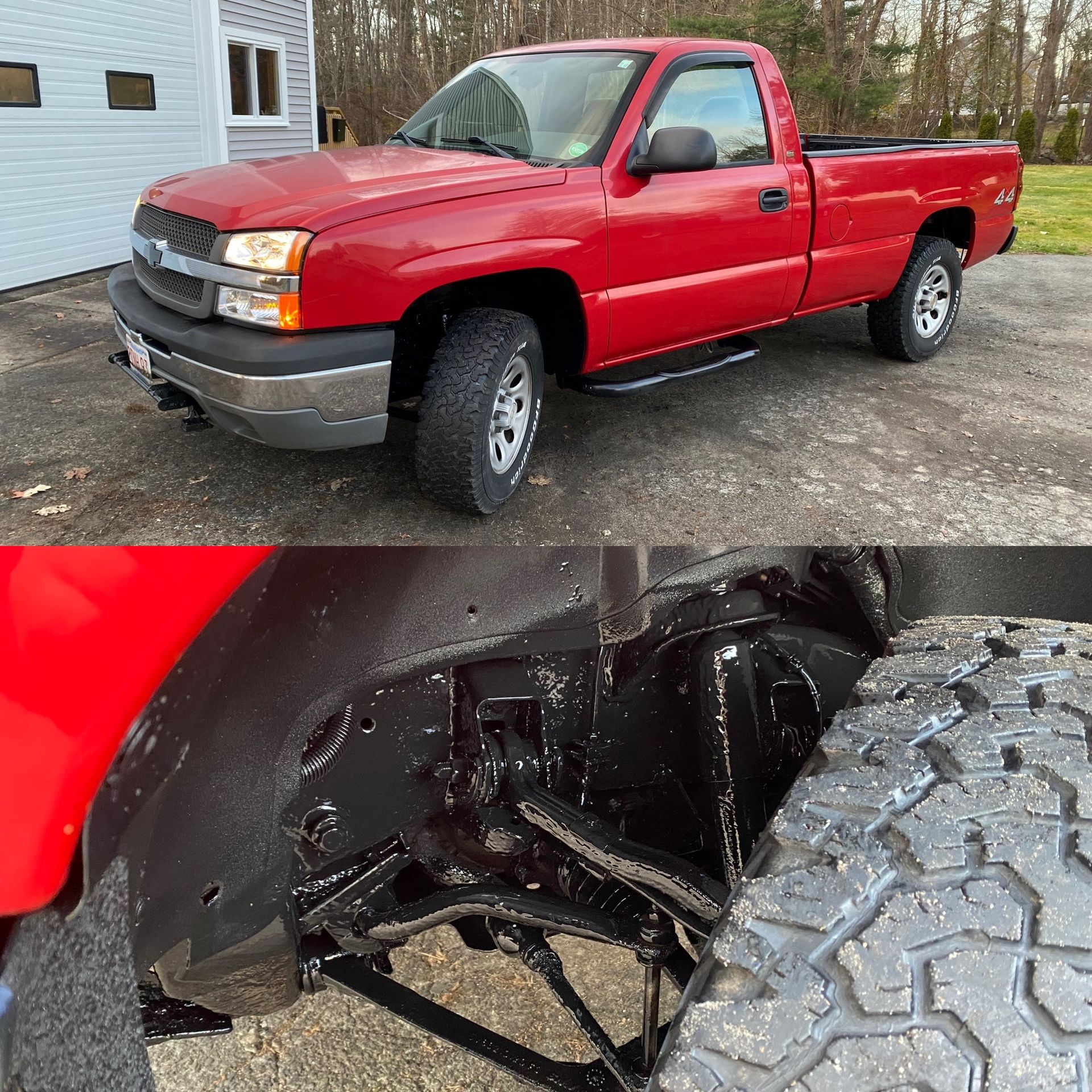
Car wheel wells are the four curved recesses inside the fenders that house each tire and catch the sand, gravel, salt, and road spray thrown up while a vehicle drives. Each opening follows the shape of the wheel arch, and the cavity contains debris before it sprays outward onto nearby undercarriage components.
Wheel wells go by several names, such as wheel arches, fender wells, or inner fender areas, and the front and rear wells both form part of the body structure around the tire opening. Wheel wells sit low on the vehicle and collect grime from wet roads long after the body looks clean
Why Do Car Wheel Wells Rust So Easily?
Car wheel wells rust easily because their cavity traps moisture, road salt, and abrasive grit against bare metal and damaged protective surfaces during winter driving. Wheel wells are among the areas most exposed to road salt on Massachusetts vehicles, making them common locations for early corrosion.
Road Salt and Moisture
Rust forms when water and oxygen meet exposed metal, but road salt accelerates the reaction by increasing the conductivity of the moisture film. Dried salt residue in wheel wells pulls moisture back to the metal and speeds corrosion.
Gravel and Road Debris
The cavity also sits near brakes, wiring, and plastic trim, so packed debris can cause impact damage on top of the corrosion. Front wheel wells also collect brake dust, the fine iron particles that rotors and pads shed. Repeated impacts from gravel and road debris can damage paint or protective coatings and expose underlying metal to moisture and salt.
By the time rust reaches the fasteners and seams,
fixing rusted wheel wells usually means stripping the corrosion, treating the bare metal, and resealing the cavity before any new coating is applied.
What Are Wheel Well Liners (Wheel Well Guards)?
Wheel well liners, also called wheel well guards, fender liners, or inner splash shields, are protective barriers that sit between the tire and the body to block road spray and debris. Wheel well liners serve a practical role because every wheel area takes water, salt, gravel, and debris.
Common liner materials include molded plastics, composites, and felt-like acoustic materials. Their designs balance impact resistance, weight, splash protection, and noise control differently. A rigid liner can provide impact resistance, while a felt-like liner may provide additional sound absorption. The best-fitting liners match the vehicle's make and model rather than relying on a loose universal shape, because a poor fit leaves gaps where salt and water still reach metal. A properly molded liner stays tight, helps limit direct exposure to road spray and debris, and keeps the cavity easier to inspect after winter driving.
Wheel well liners are physical barriers. They are different from dedicated wheel-well coatings, which are applied directly to the wheel-well surface.
How Do Wheel Well Liners Prevent Rust?
Wheel well liners prevent rust by placing a physical barrier between road salt and the sheet metal, reducing direct exposure to the moisture and chloride that contribute to corrosion. The same barrier also reduces impact damage from rocks and grit that would otherwise chip paint and expose bare steel.
Liners further shield suspension parts, brakes, wiring, and painted body panels from direct road spray, which can help reduce exposure to contaminants and related maintenance issues. An intact liner can also make routine inspection easier, since dirt and debris are less likely to collect directly against exposed metal.
Wheel well liners do not stop rust completely, because they cannot protect every seam or exposed surface. Their primary role is to reduce direct exposure to road spray and debris.
What Other Benefits Do Wheel Well Liners Offer?
Beyond rust protection, wheel well liners can help deflect flying stones and road debris while giving the wheel opening a cleaner, more finished appearance. Felt-like acoustic liners reduce tire roar, the noise part of NVH (noise, vibration, and harshness). The difference is noticeable on salted highways and plowed side streets through a Massachusetts winter.
Some liner materials also help manage radiant heat away from paint and plastics near hot brake components and dark body panels. The result is a quieter cabin and a more uniform underbody finish with less visual clutter around each tire.
How Do Professionals Protect Car Wheel Wells?
Professional wheel-well protection can combine corrosion-resistant undercoating with a dedicated wheel-well coating, depending on the vehicle's condition and exposure. This approach can address both corrosion-prone seams and high-wear wheel-well surfaces without treating a physical liner and a coating as the same type of protection.
Oil undercoating penetrates seams and displaces moisture. A dedicated wheel-well coating adds a durable, flexible layer to exposed wheel-well surfaces. Timing matters as much as product choice, because a fall application gives the treatment time to penetrate seams and establish its protective layer before snow and slush peak.
The right wheel well treatment depends on vehicle condition, existing corrosion, and expected salt exposure.
Expert Insight:
"In our East Bridgewater shop, the wheel wells are almost always where we see the first rust after a single salt season, long before the rocker panels show it,"
say the technicians at New England Rust Defenders.
"Sealing that cavity in the fall is the cheapest corrosion insurance a Massachusetts driver can buy."
What Does Wheel Well Protection Cost?
Wheel well protection costs vary based on the vehicle, existing corrosion, protection method, coverage, and labor required. Aftermarket wheel well liners typically vary by vehicle make and model, while professional undercoating and dedicated wheel-well coatings are generally priced according to vehicle size and the treatment required.
The table below compares the main wheel well protection methods.
| Protection method | How it works | Best for | Reapplication | Typical cost |
|---|---|---|---|---|
| Oil undercoating | Oil-based coating penetrates seams and helps displace moisture | Salt-belt daily drivers | Depends on product and exposure | Varies by vehicle and provider |
| Wax-based undercoating | Wax-based protective material creates a durable corrosion barrier | Newer vehicles and selected exposed areas | Depends on product and exposure | Varies by vehicle and provider |
| Wheel-Well Guard coating | Durable, flexible compound protects wheel-well surfaces | High-salt and high-debris exposure | Depends on product and exposure | Varies by vehicle and provider |
| Aftermarket wheel well liners | Molded physical barrier blocks spray and impact | Added debris protection | Replace when cracked or damaged | Varies by vehicle and provider |
How to Clean and Maintain Car Wheel Wells
Car wheel wells should be inspected and cleaned regularly, with more frequent rinsing during periods of heavy road-salt use, snow, or mud. For normal driving, checking them every 1 to 2 months provides a practical maintenance interval. Regular cleaning removes salt residue before it remains on vulnerable surfaces and makes cracks, loose clips, and early rust easier to spot.
The maintenance sequence follows five steps:
- Pre-wash rinse with a pressure washer or hose removes loose dirt so scrubbing does not grind it in.
- Chemical cleaning with an all-purpose cleaner or degreaser breaks down road film and residue. Each cleaner needs the dwell time on its label before scrubbing starts.
- Scrubbing with a long-handled stiff brush reaches the rough areas and seams where mud sticks.
- Final rinse and drying with a microfiber towel clear leftover moisture so none stays trapped in seams.
- Protection treatment applies an appropriate corrosion inhibitor or protective coating when needed.
Drying is especially important in Massachusetts, where cold weather slows evaporation and a damp cavity keeps working against the metal long after washing ends. Smooth, properly fitted liners can also make some wheel-well surfaces easier to rinse and inspect.
Signs Your Car Wheel Wells Need Attention
Car wheel wells need attention when liners show cracks or missing clips, mud packs behind the shield, or new rattles and rubbing appear after a tire or suspension change. Loose edges let a liner flap and expose the cavity, while packed mud or sand points to poor drainage that can hide corrosion until it becomes severe.
Other signs of corrosion include:
- Bubbling or blistering paint
- Reddish-brown rust staining
- Flaking paint or protective coating
- Corrosion around fasteners
- Perforation or holes
- Cracked or missing liner sections
- Loose liner clips or mounting points
- Packed mud or debris that does not clear during normal washing
- New rubbing or rattling from a loose liner
Rubbing marks after a lift or tire change can mean the fit is off or the liner is contacting the tire, and unusual pinging after road work can signal a loose guard. A quick check around the fasteners and edges, especially after a tire-size change, suspension work, or a rough plowed-road season, often reveals problems before corrosion becomes more extensive.
Professional Wheel Well Protection in East Bridgewater, MA
New England Rust Defenders protects Massachusetts wheel wells with NH Oil Undercoating, Boss Wax & Oil, Hybrid Wax, and a custom Wheel-Well Guard coating built for salt-belt driving. The shop serves East Bridgewater and surrounding South Shore and Southeastern Massachusetts communities, focusing on the hidden areas where seasonal rust usually starts.
The strongest plan for high-salt driving usually combines a physical guard with chemical undercoating, so the liner handles impact while the oil coating handles corrosion in the seams a liner cannot reach. A consultation after each winter, or annually depending on usage and exposure, fits Massachusetts conditions far better than a one-time treatment.
For a tailored assessment before salt season, send
New England Rust Defenders 2-3 photos of your current vehicle, including each wheel well, and the team can recommend the right level of coverage. A
Wheel-well guard service in East Bridgewater, MA seals the wheel arches against moisture, salt, gravel, and debris before winter driving sets in.
Frequently Asked Questions
About the Author
New England Rust Defenders (the N.E.R.D.s) is a vehicle-protection shop based in East Bridgewater, MA, specializing in the Wheel-Well Guard coating for salt-belt rust prevention. The team applies a durable, flexible compound tailored to each vehicle's make and model, sealing the wheel arches against the moisture, salt, gravel, and debris that cause the earliest rust damage on Massachusetts roads.
Last updated: October 2026
You might also like